OS
Plans and runs engineering tasks.
- Describe a task in plain language
- Agents drive CAD and engineering tools
- Converts 2D drawings to STEP and repairs scans
- Shares repeatable Apps across a team
Aibuild is used by aerospace, automotive, construction, energy, marine and art & design teams. Aibuild OS automates engineering tasks with AI agents, Aibuild FETS simulates builds before they are printed and Aibuild CAM generates toolpaths for large format additive manufacturing and CNC.
Each industry uses a different mix, but the flow is the same: plan the job, check it, then make it.
Plans and runs engineering tasks.
Predicts the build before you print.
Turns parts into machine-ready toolpaths.
Clients also report 65% fewer failed builds and a 90% efficiency gain in overall build time.
Aerospace and defence teams use Aibuild to print autoclave tooling, space hardware and flight-qualified metal parts, to simulate distortion before committing material, and to keep every file and toolpath secure and traceable. Aibuild is ISO 27001 certified and ITAR compliant, with AWS GovCloud and on-premise options.
Real parts produced with Aibuild CAM across polymer and metal processes.
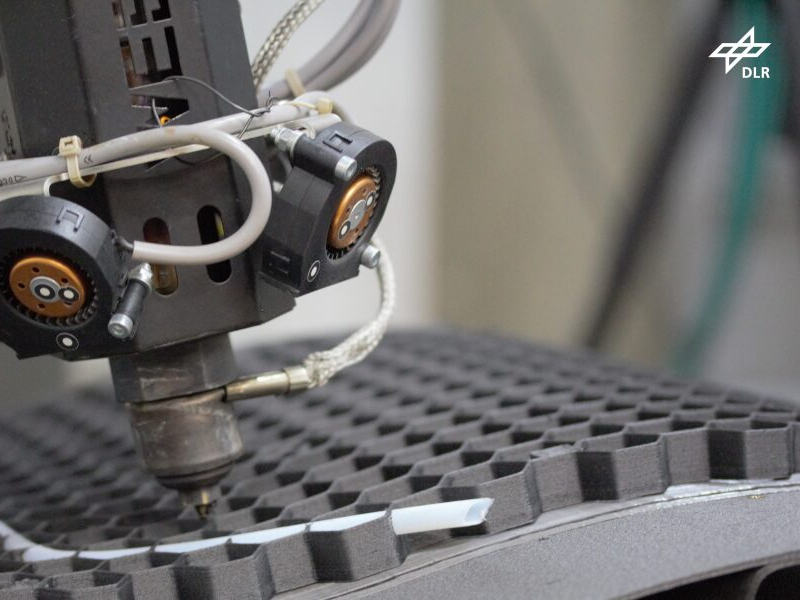
PEEK printed directly onto thermoplastic laminates by DLR.
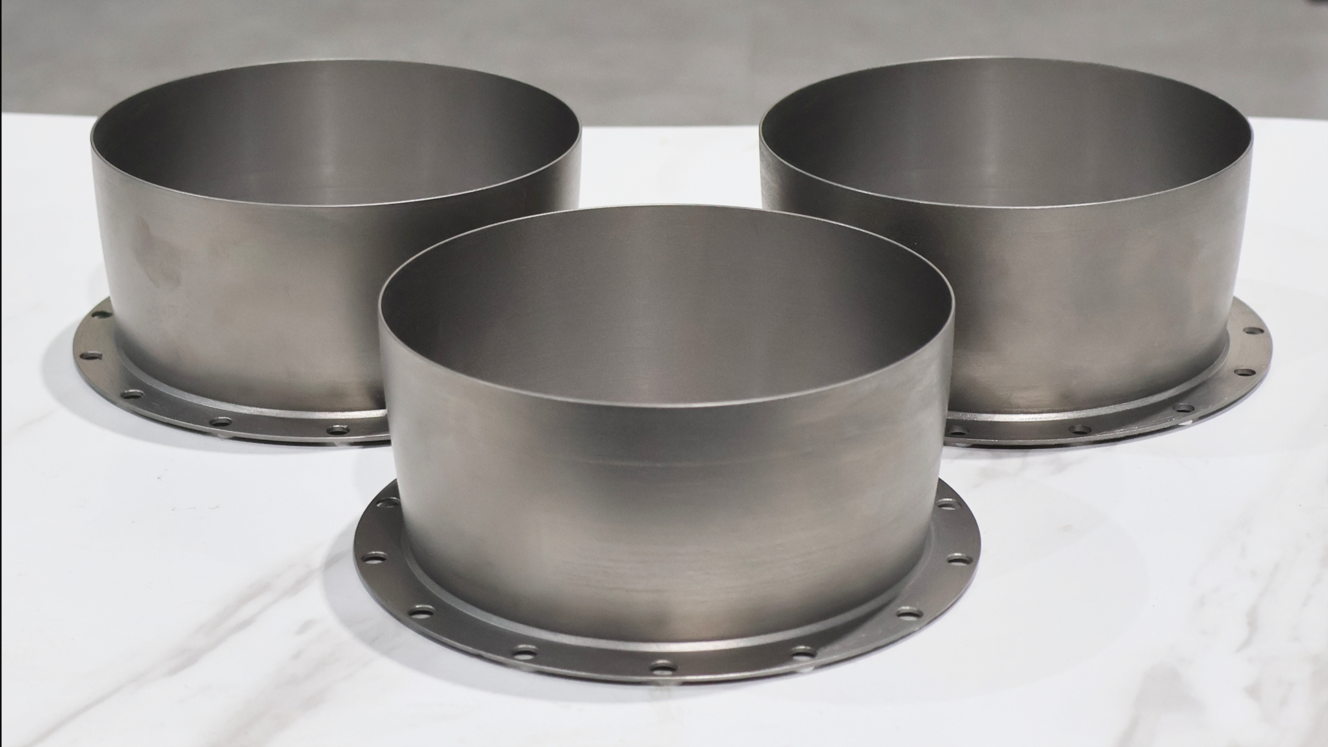
C103 nozzles printed by LabAM24 for KARI.
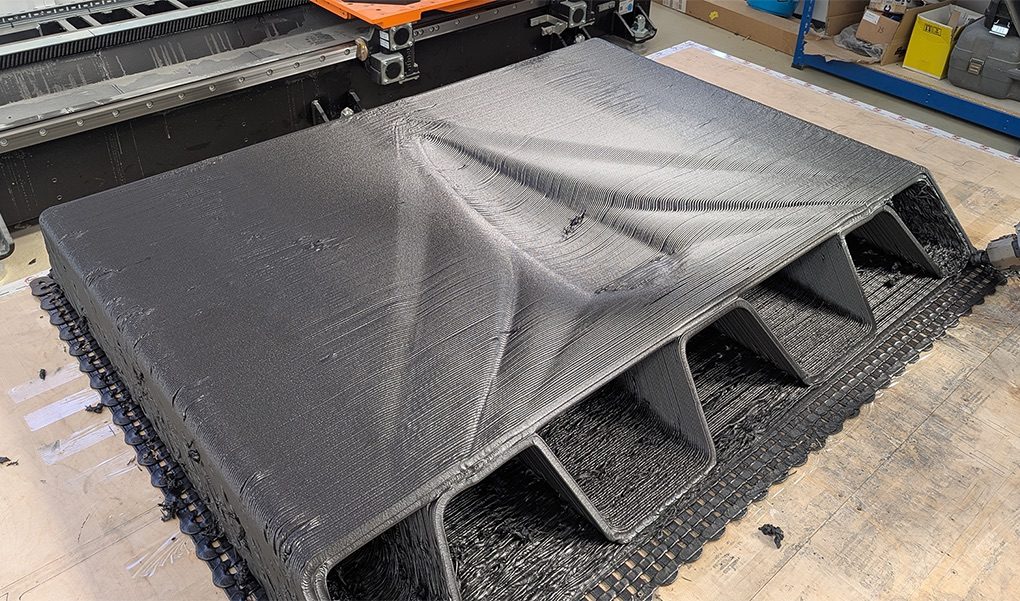
Large format composite tooling printed for defence programmes.
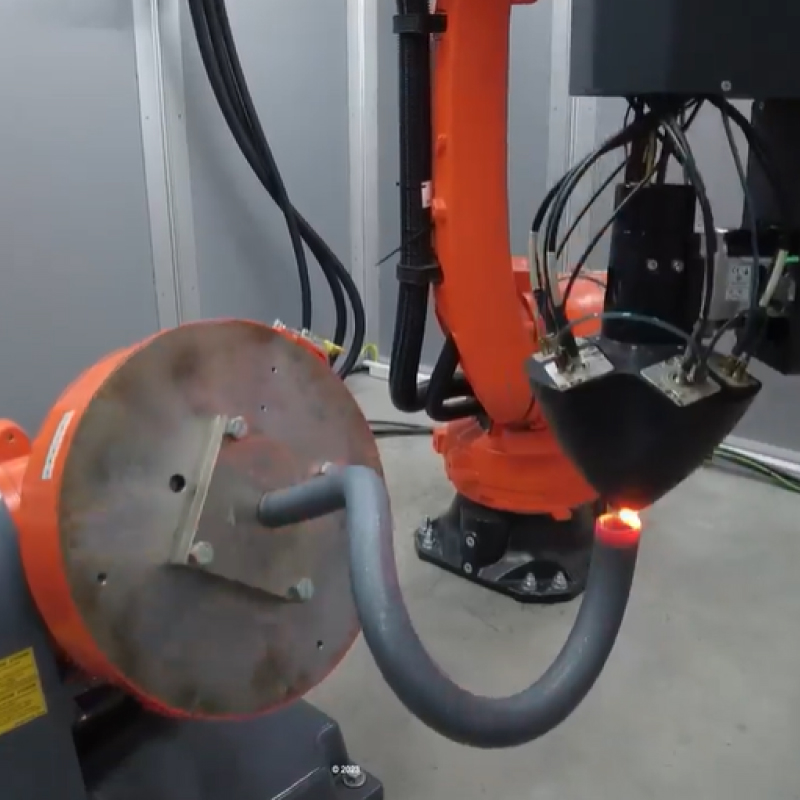
Laser wire deposition along a multi-axis path.
Use them separately or as one flow from drawing to qualified part.
Automates the engineering around the part.
Predicts distortion before the first layer.
Produces traceable, repeatable toolpaths.
Validated as part of COMPADDITIVE, an Innovate UK funded project with Additure, AMRC and Turkish Aerospace Industries.
Aibuild is ISO 27001 certified and ITAR compliant. Multi-factor authentication can be enforced per user or across an account, and high-security teams can run Aibuild in AWS GovCloud or on-premise.
Files, workflows and manufacturing data are shared inside your organisation only, and toolpaths stay backwards compatible so a part made today can be re-computed identically years later.
Automotive teams use Aibuild to print end-of-arm grippers, jigs, fixtures, moulds and low-volume parts on demand, cutting lead times and supply chain cost. Aibuild OS speeds up the engineering work around each part, Aibuild FETS checks the build and Aibuild CAM produces the toolpath.
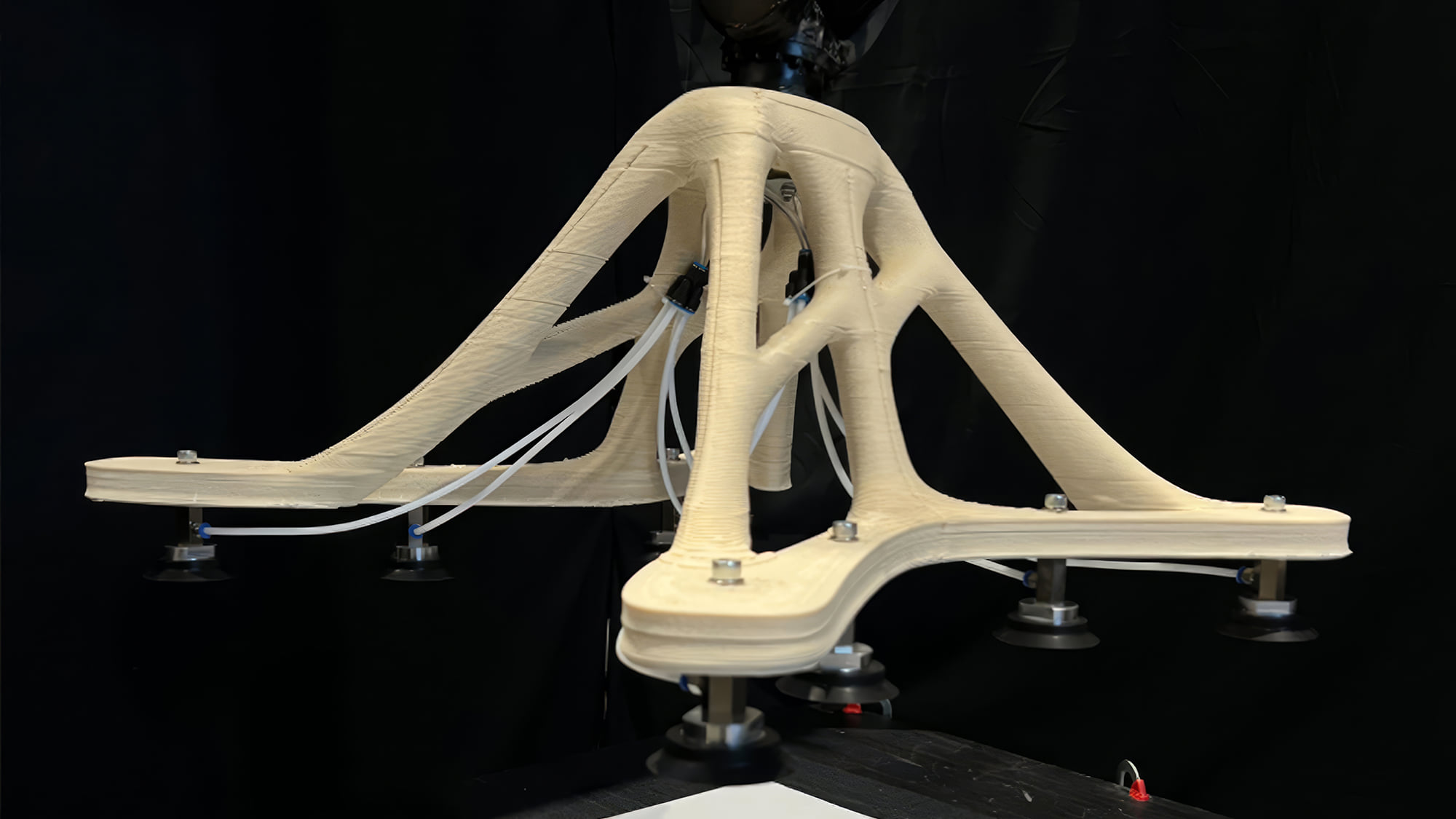
Lighter, cheaper end-of-arm tooling printed to order.
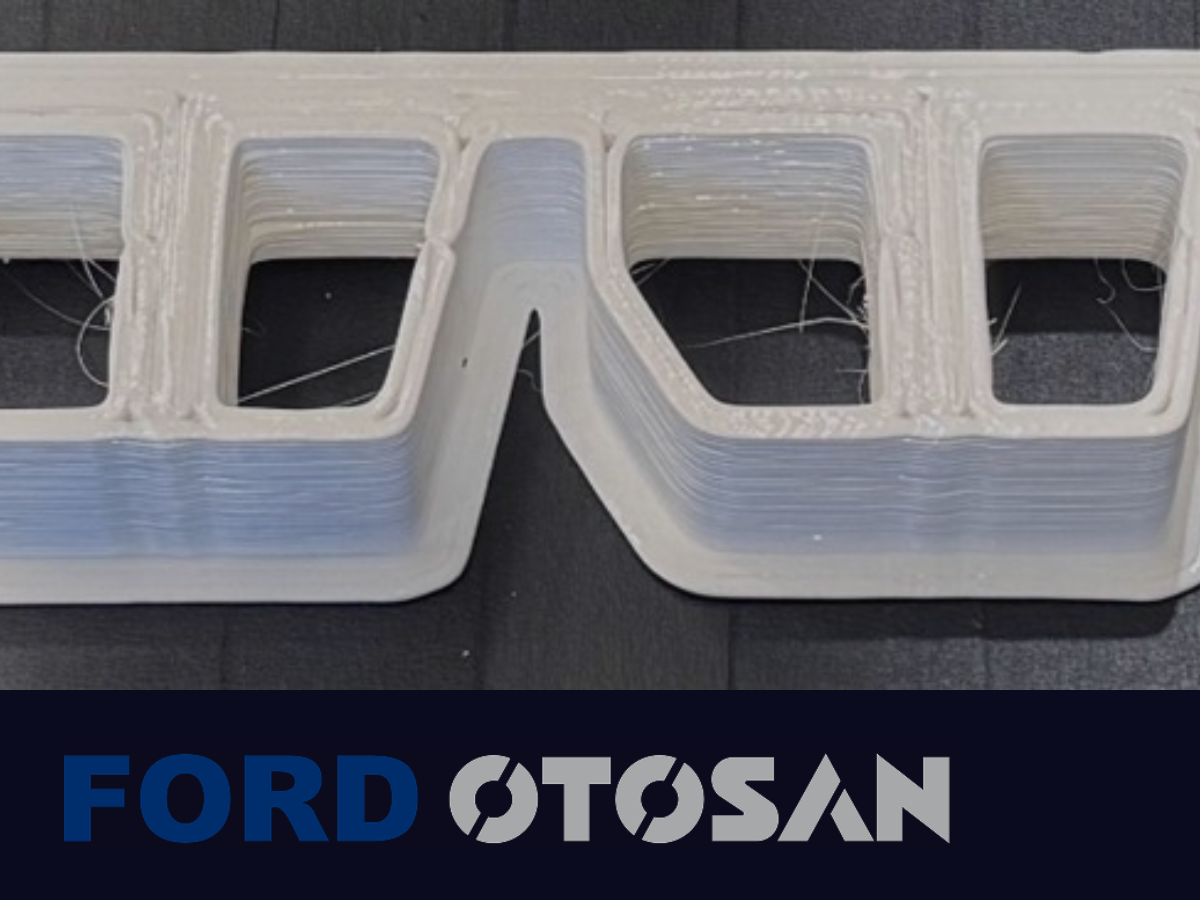
Assembly and inspection aids made in days.
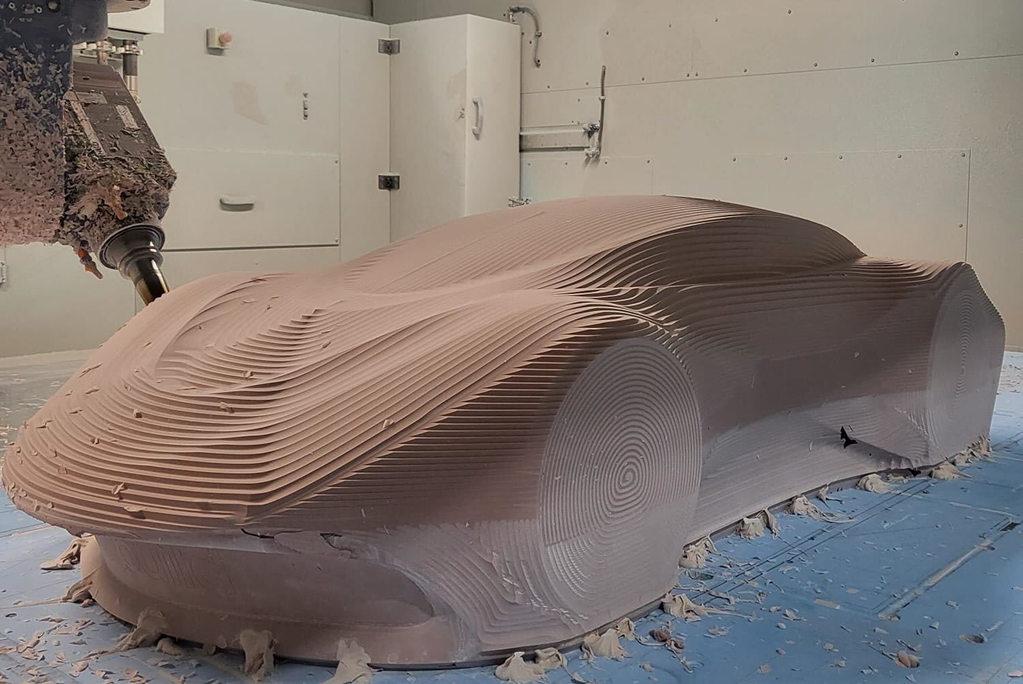
Large format tooling without long machining lead times.
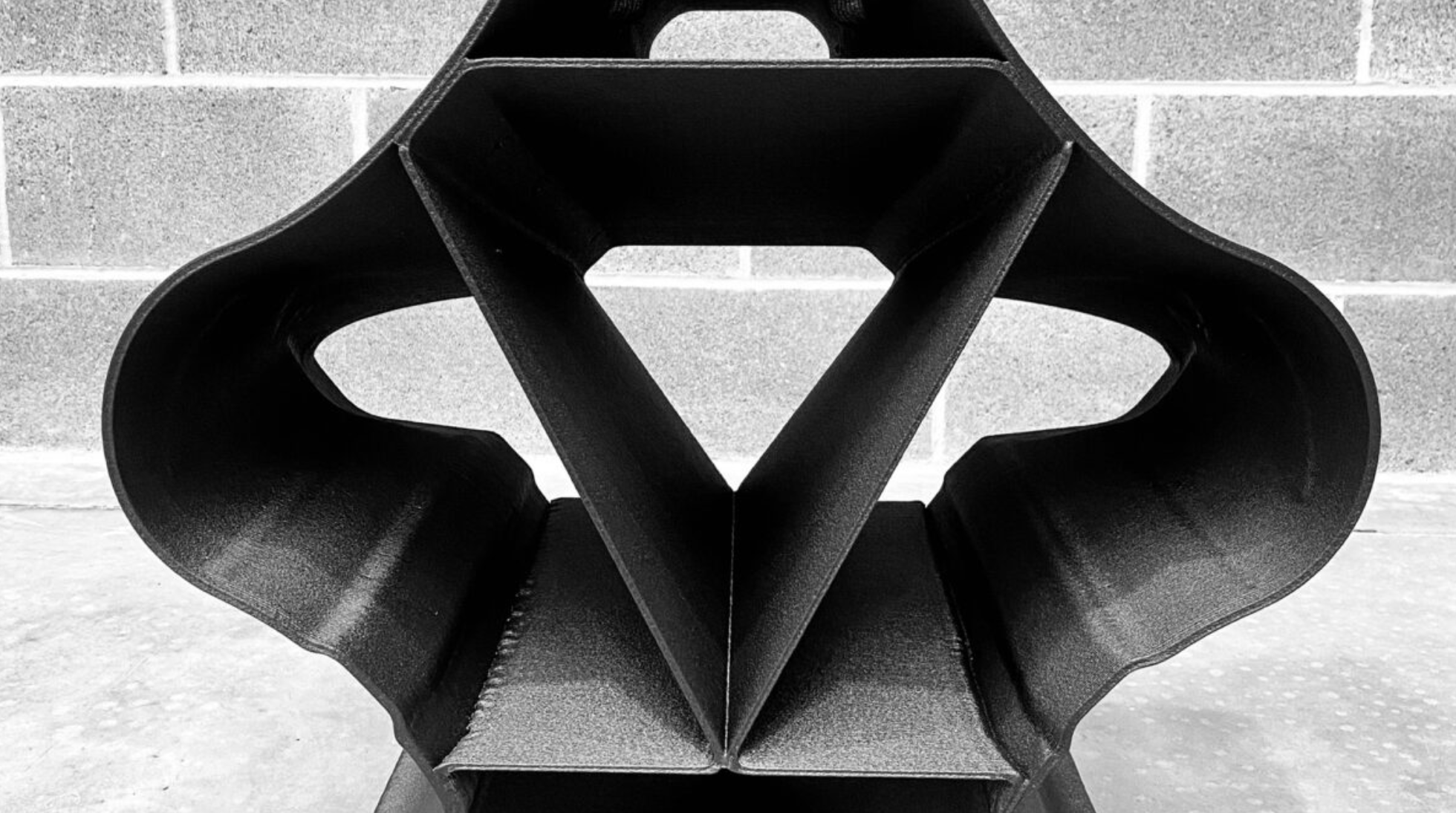
Design changes printed without new tooling.
From the CAD model to a part on the line.
Cuts the engineering admin.
Catches warping before printing.
Makes the part.
They also build successful toolpaths 86% quicker, with parts up to 3× stronger.
Construction and architecture teams use Aibuild CAM to generate toolpaths for 3D printed concrete walls, housing and architectural elements, improving accuracy and print efficiency. Aibuild OS handles engineering tasks around the design and Aibuild FETS can predict how large polymer forms behave as they cool.
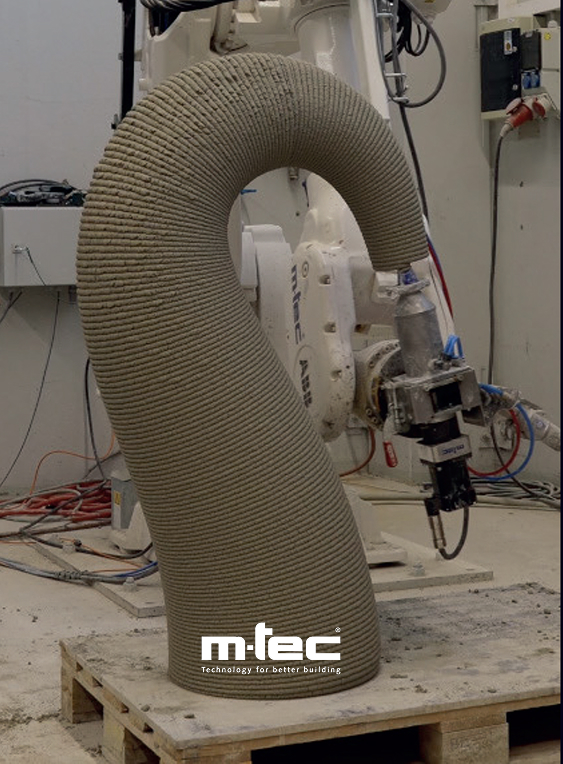
A curved concrete piece printed on an ABB robot with m-tec.
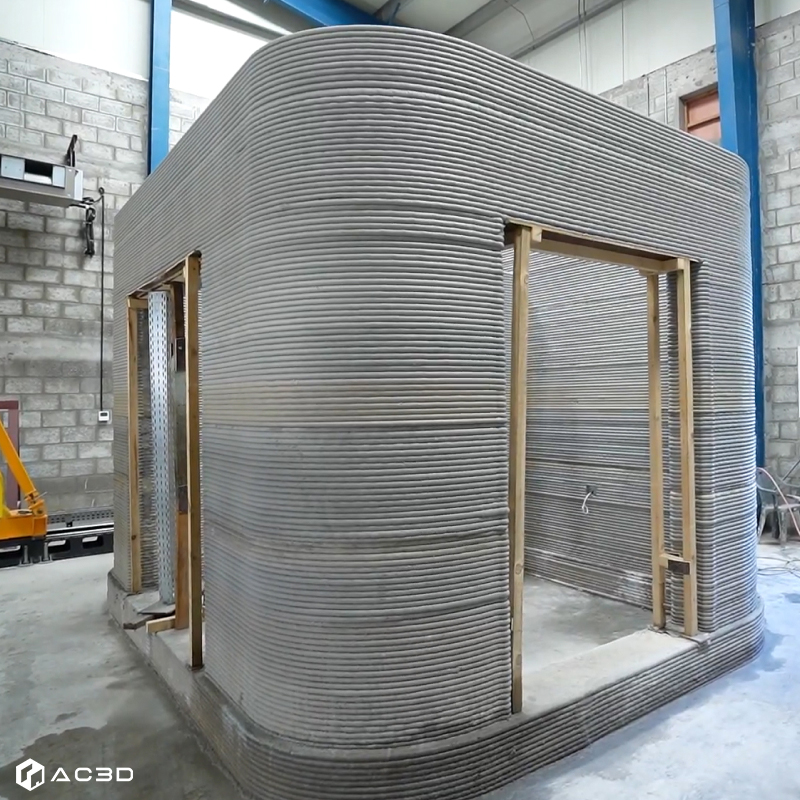
Continuous toolpaths for printed structural walls.
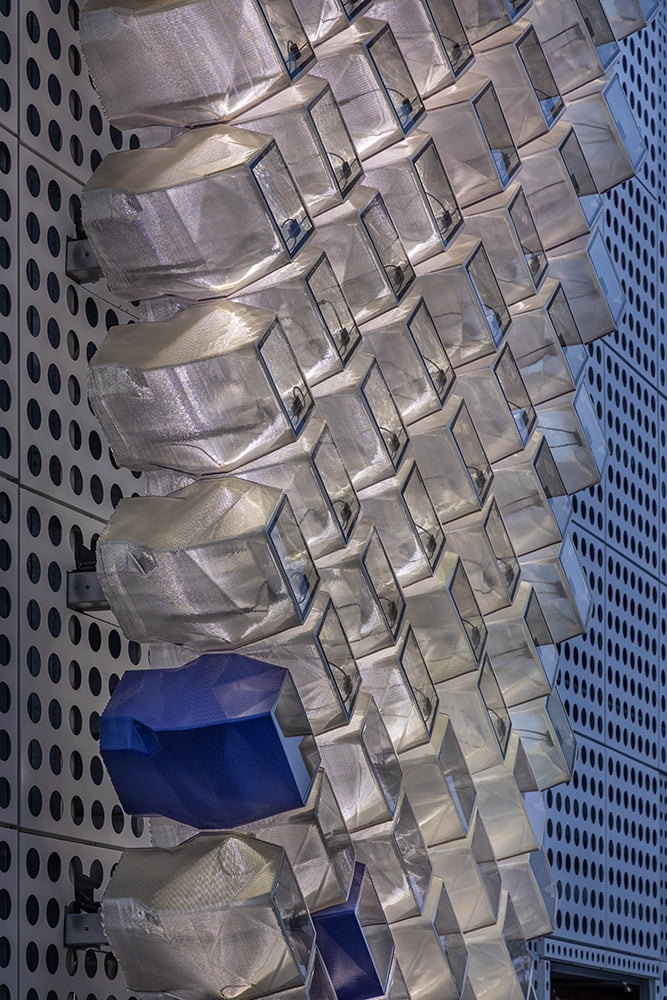
Facade panels, columns and freeform pieces.
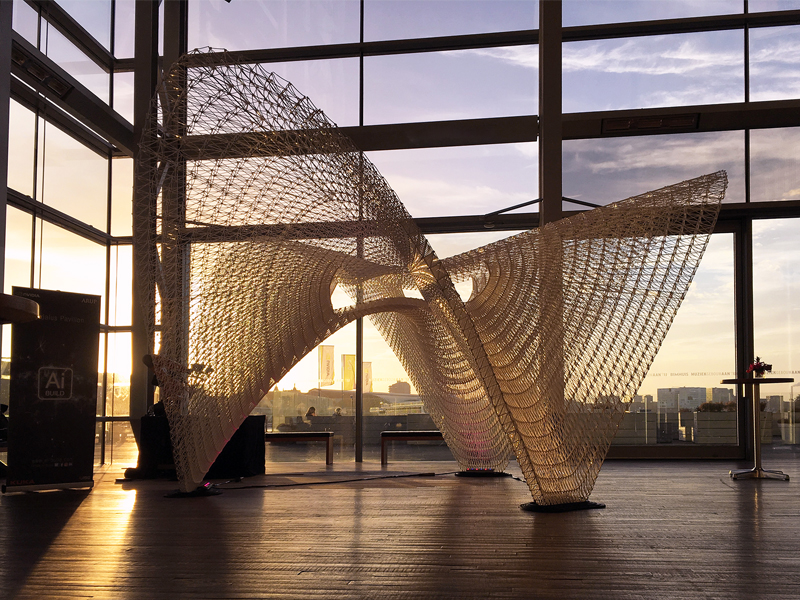
A large printed lattice pavilion, sliced in Aibuild.
Plan the structure, check the forms, print the walls.
Speeds up the design work.
Checks large polymer formwork.
Prints the structure.
Energy companies use Aibuild for in-field additive repair of worn parts, sand casting moulds for mining and oil, wind turbine blades and thin-walled metal propellers. Aibuild OS cleans up scan data and plans the work, Aibuild FETS simulates the build and Aibuild CAM prints the repair or part.
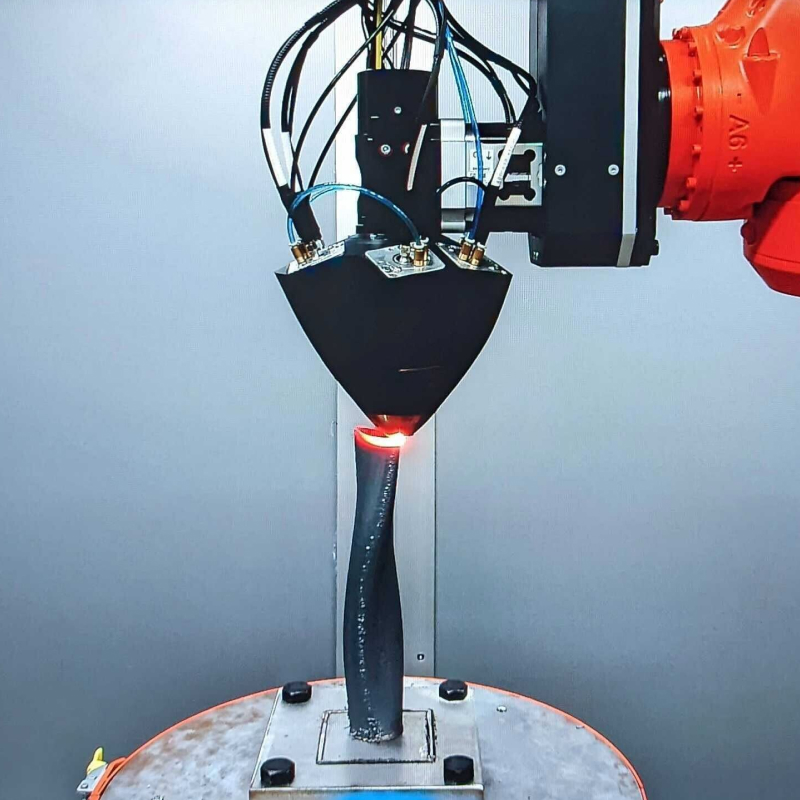
Toolpaths from 3D scans of damaged parts.
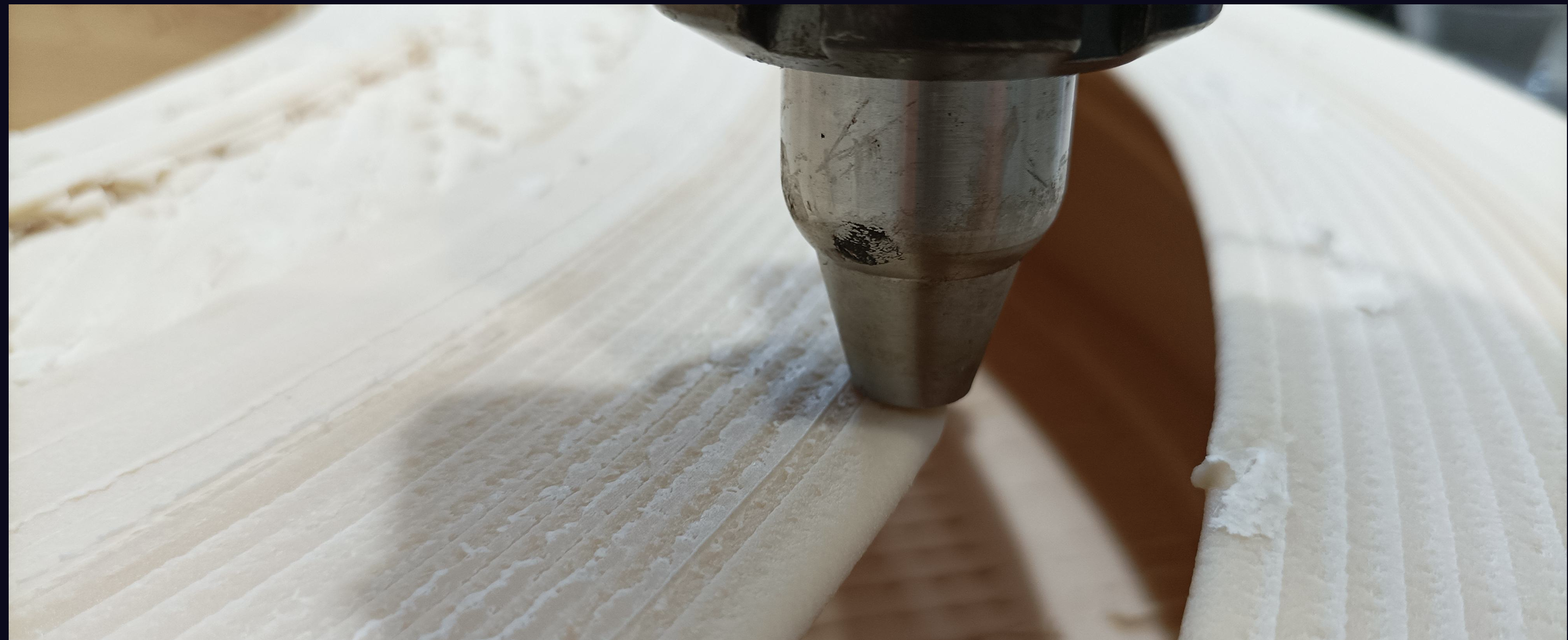
Used by mining and oil clients to save time and cost.
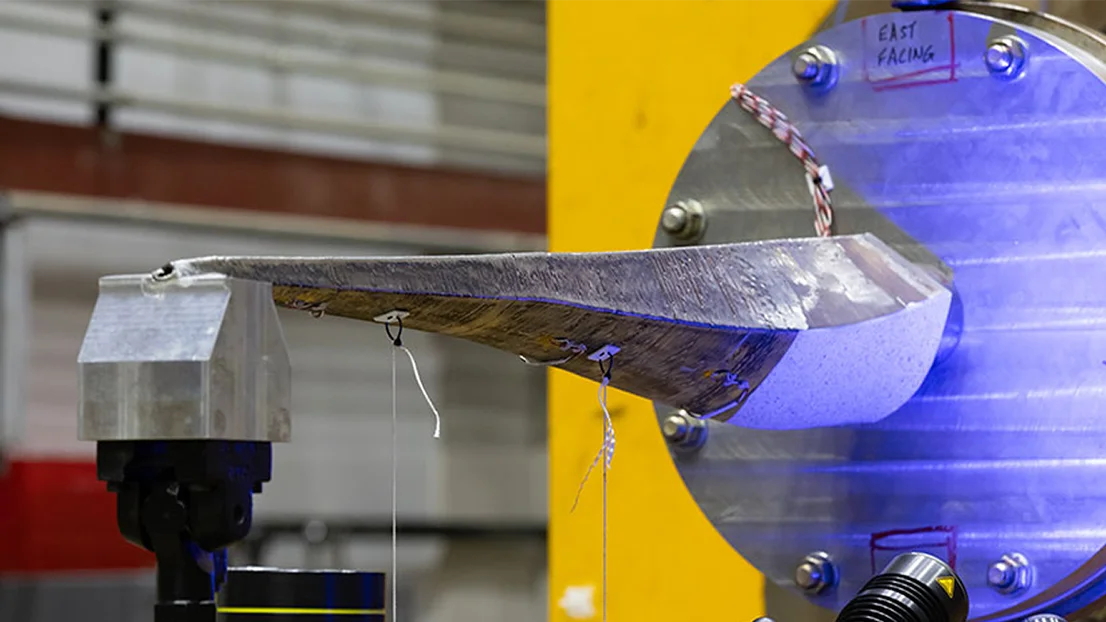
Multi-axis printing to optimise directional strength.
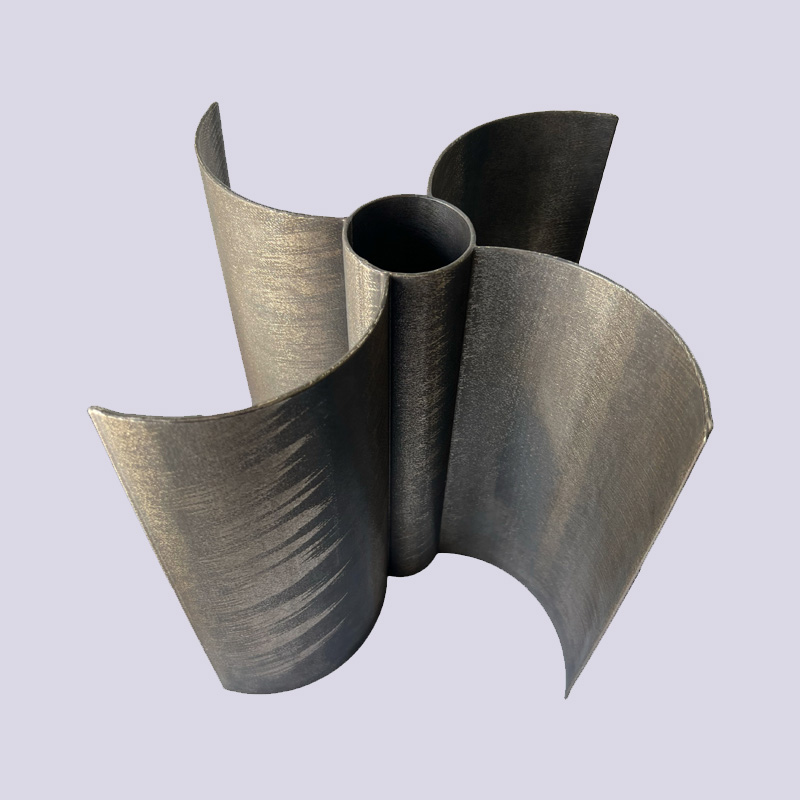
Thin-walled metal structures with DED.
Scan the damage, check the repair, print it on site.
Cleans and prepares scan data.
Predicts repair heat and distortion.
Prints the repair or the part.
Marine teams use Aibuild to print tooling for glass-fibre parts, hull moulds and whole boat hulls with automated large format additive manufacturing, as well as metal parts for marine energy. Aibuild FETS predicts how large prints distort as they cool and Aibuild OS automates the engineering around each mould.
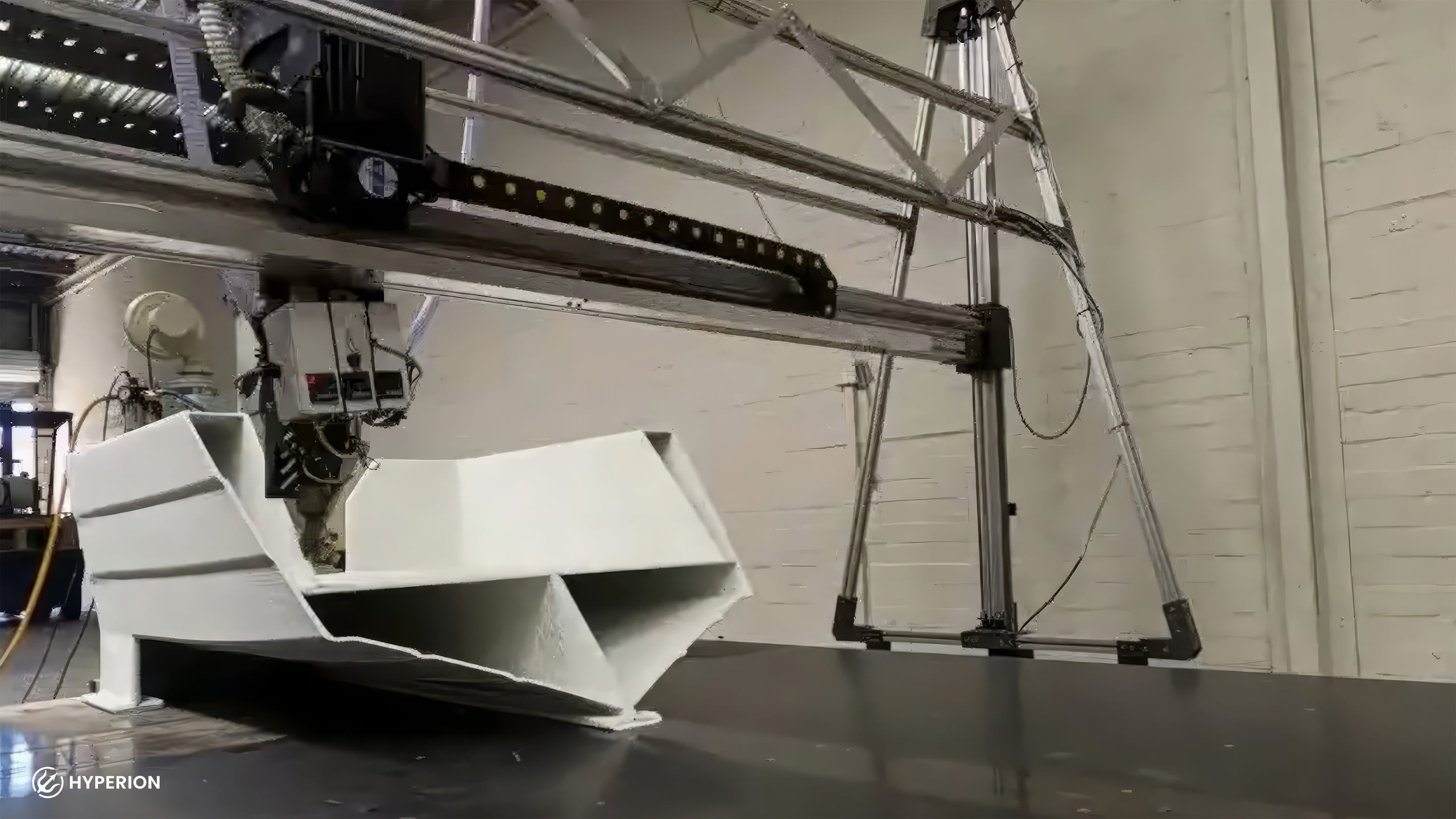
Large printed moulds for glass-fibre lay-up.
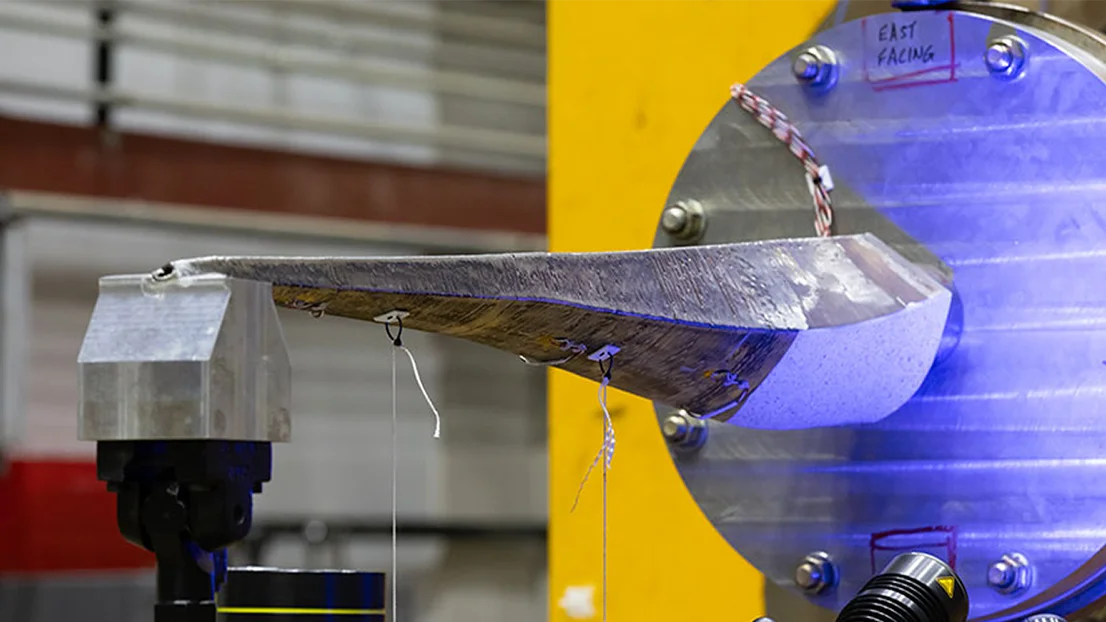
One-piece 316L stainless spar printed with Meltio DED on a KUKA robot, for NREL.
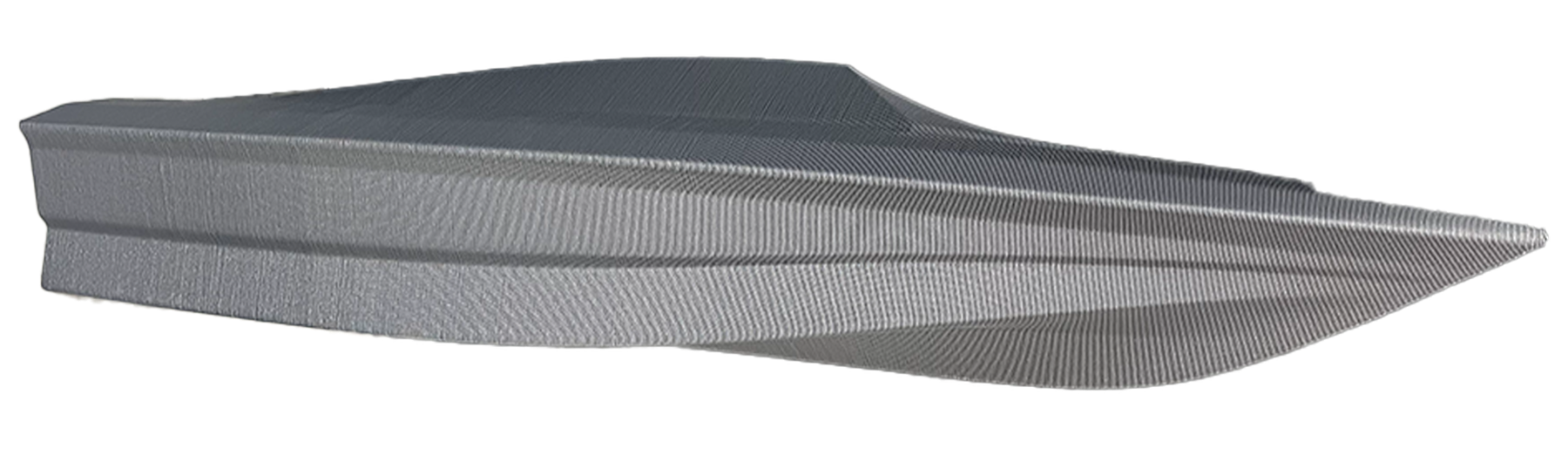
Whole hulls printed with automated LFAM.
From hull design to a printed mould.
Automates mould engineering.
Predicts mould distortion.
Prints the mould.
Artists, designers and studios use Aibuild CAM to print furniture, sculpture and architectural pieces at full scale, often from recycled and bio-based materials. Multi-axis toolpaths make support-free curves and textured surfaces possible, and Aibuild OS can turn a design brief into production-ready models.
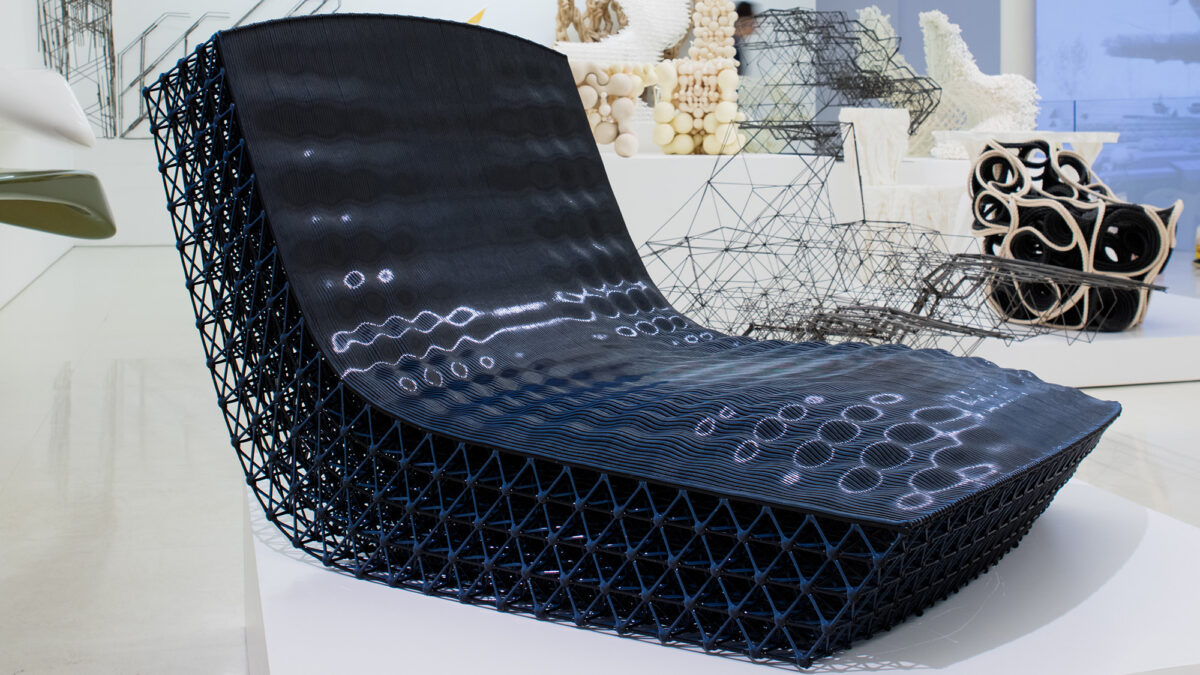
Chairs, tables and lighting printed in one piece.
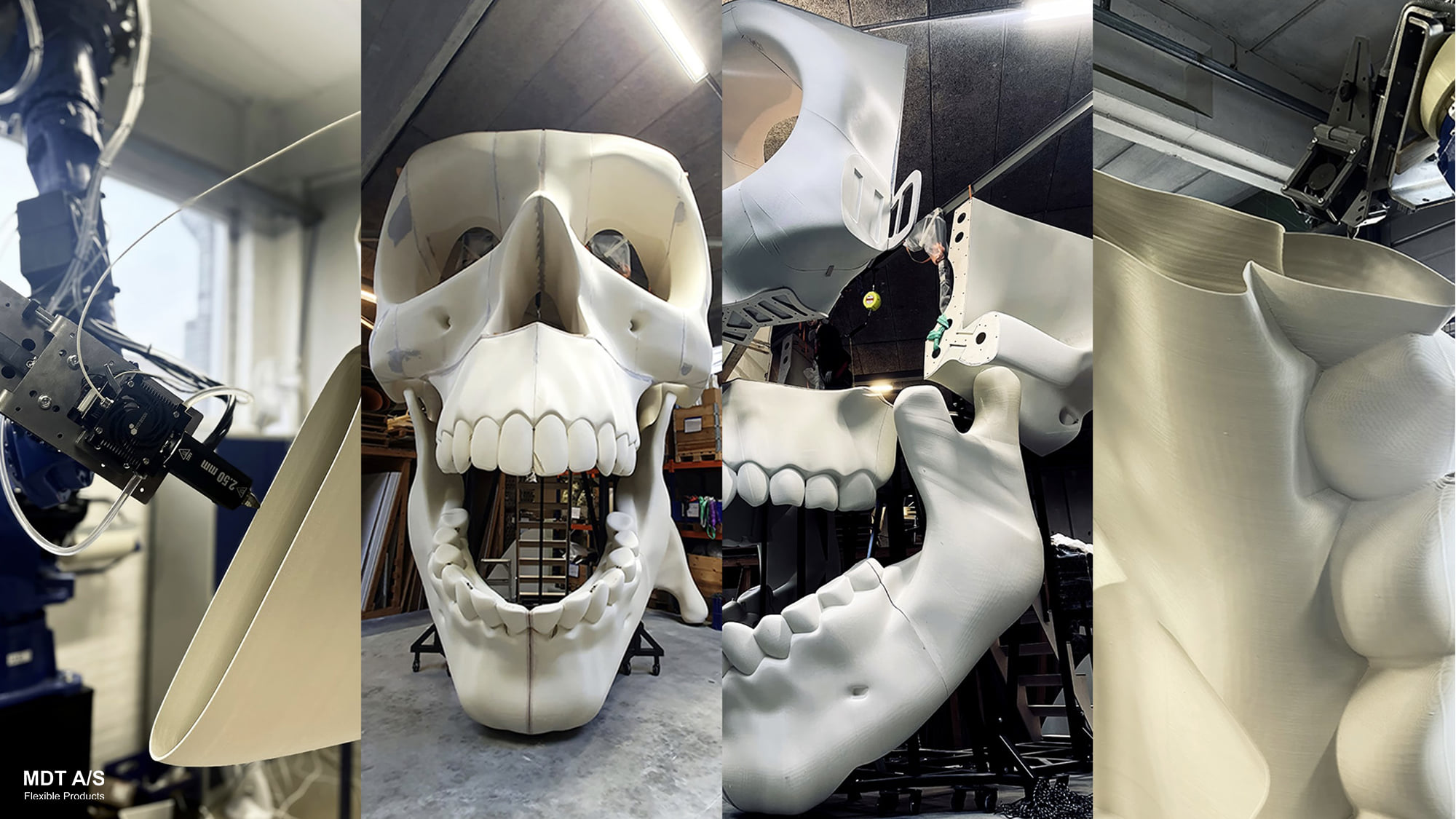
Large freeform works with support-free curves.
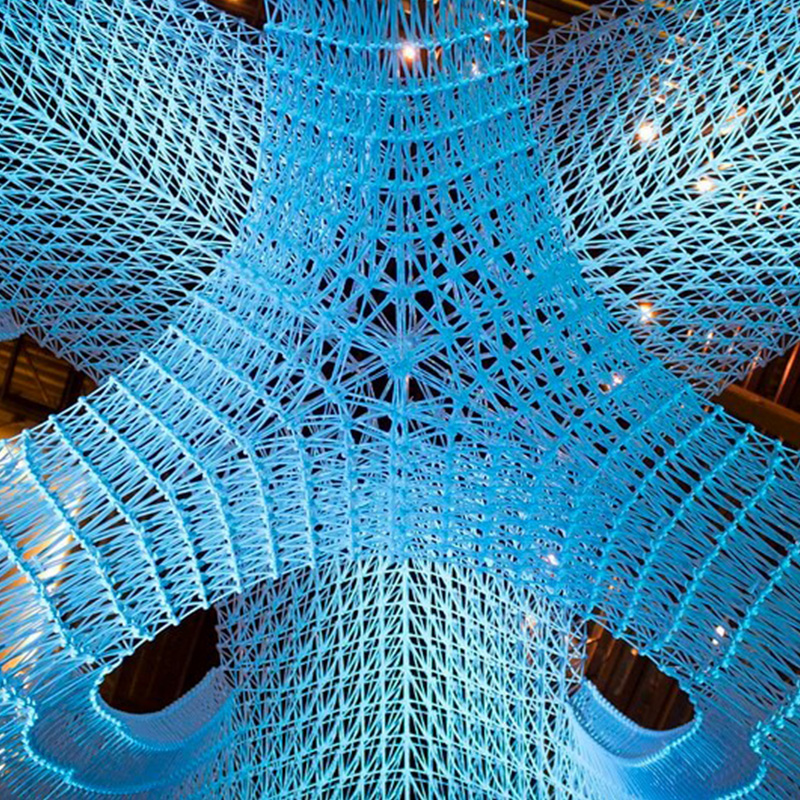
Installations, facades and interior features.
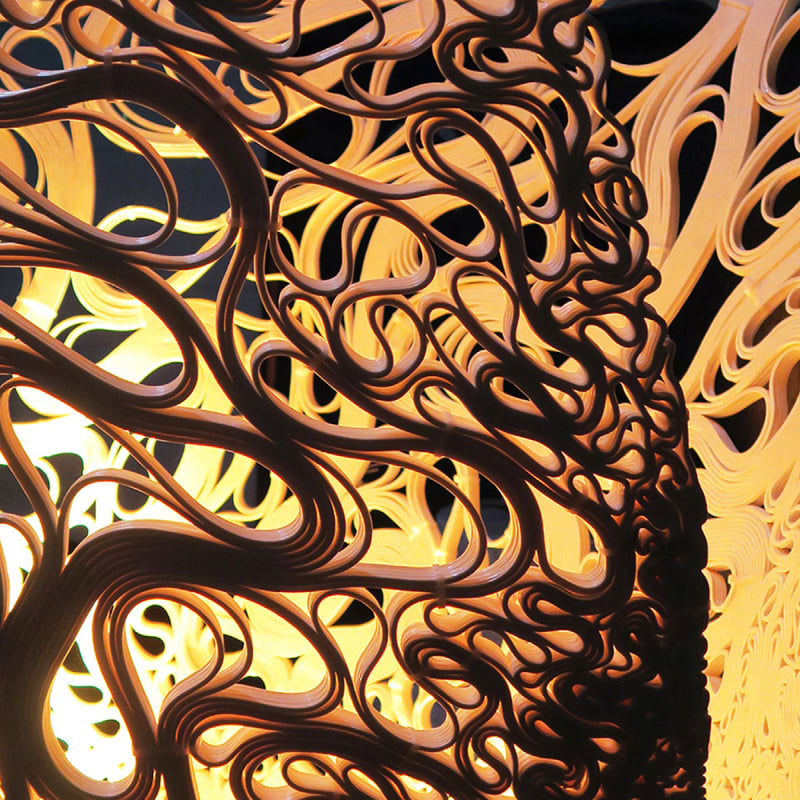
Pieces printed from recycled polymers and waste streams.
From sketch to finished piece.
Turns ideas into models.
Checks big prints before they warp.
Prints the piece.
Aibuild is used in aerospace and defence, automotive, construction, energy, marine, and art and design, as well as in research labs and universities. Customers range from tier 1 aerospace and energy companies to design studios.
Aibuild OS is the agentic AI layer: you describe an engineering task and its agents plan it and drive your tools, such as CAD, to produce the files. Aibuild FETS then simulates the build to predict heat, distortion and residual stress before anything is printed. Aibuild CAM generates the production toolpath for your robot, gantry or CNC machine.
Each product can be used on its own. Used together, one task can go from a drawing or scan to a simulated, machine-ready toolpath.
Aibuild CAM supports polymer pellet extrusion (FGF), polymer filament extrusion (FFF), metal wire DED, wire arc additive manufacturing (WAAM), concrete, ceramic and other additive processes, plus subtractive processes such as CNC milling for finishing.
Aibuild FETS simulates DED, WAAM, AFSD, FGF and FFF builds across metals and thermoplastics, and works with toolpaths from any CAM software.
Yes. Aibuild OS is free to try: you can run a task on the homepage and carry on in Aibuild OS with just an email address. Aibuild FETS has a free trial, and the Aibuild CAM team can set up a pilot for your process.
Share your parts, process and machines and we’ll show you how Aibuild fits.